How Photographers Hurt Themselves by Sharing Too Many Photos on Social Media
Marching band events are vibrant, high-energy performances that demand the skill and attention of professional photographers. Whether it's a high school band competing in a regional contest or a college band marching in a parade, these events are full of moments worth capturing: the precise formations, the intense expressions, the crowd’s excitement. For these reasons, photographers who specialize in marching band events are often called upon to document these performances, providing families, schools, and fans with professional-quality images that become cherished keepsakes.
But in today’s digital age, social media has created a paradox for professional photographers in this niche: while it’s a powerful platform for marketing and connecting with clients, it also presents a unique challenge. Some photographers, eager to share their work and attract attention, may be posting too many images from these events on social media. While this may seem like a good way to promote their business, it can actually harm their profitability, as well as the profitability of other professional photographers in the same field.
Here’s how sharing too many images from marching band events on social media can have a negative impact on both individual photographers and the broader professional community.
1. Over-Saturation and Reduced Demand for Paid Photos
When photographers share large numbers of images from marching band events on social media, they contribute to the over-saturation of content. Social media platforms like Instagram, Facebook, and Twitter are filled with countless photos from every angle of the event, often taken by multiple photographers, parents, students, and even fans.
The problem arises when these images flood users' feeds, making it harder for professional photographers’ images to stand out. While sharing a few highlights or teasers from an event can attract attention, posting a large volume of images can quickly diminish the perceived value of those photos. When attendees and their families are exposed to a steady stream of free content, they may no longer feel the need to pay for professional photographs. After all, why buy a high-quality print or digital download when they already have dozens of pictures from the event on their social media profiles?
For professional photographers, this means reduced demand for paid photos. When clients can see what seems like an abundant supply of free images, they may skip purchasing professional packages altogether. This is particularly detrimental for photographers who depend on selling event photos as their primary revenue stream.
2. The Undervaluation of Professional Work
When a photographer shares too many images from a marching band event, it can contribute to a general sense that the photos are "everywhere" and therefore not as valuable. Professional photography isn’t just about taking pictures; it’s about capturing special moments with a trained eye, curating a selection of high-quality, edited images, and presenting them in a way that tells a compelling story.
However, when clients (especially parents and band members) see a flood of images from every angle, it can lessen their appreciation of the work that goes into professional photography. They might start to think, “If my phone camera can do that, why should I pay for a professional?” This mindset can be particularly harmful in the marching band community, where many families already invest significant amounts in uniforms, travel, and other activities, and may see professional photos as a luxury rather than a necessity.
When the value of professional work is undermined by too many free or easily accessible images, photographers may find themselves struggling to justify their pricing, resulting in lower sales, fewer bookings, and ultimately, lower profits.
3. Disrupting the Photographer's Business Model
Most professional photographers operate with a business model that includes both a pricing structure and an agreed-upon set of terms with their clients. These terms often specify how images can be used and shared, with the goal of allowing the photographer to profit from their work.
When photographers themselves share too many images from a marching band event on social media, it can inadvertently disrupt their own business model. Photographers often offer packages that include prints, digital downloads, or albums, with the goal of making money from each sale. However, by posting too many images online, they risk eroding the sense of scarcity or exclusivity that drives clients to make a purchase.
Imagine this: a photographer posts hundreds of images from a recent marching band performance to their social media profiles. These images are available for anyone to see, download, or share. Meanwhile, a parent or fan, who may have been considering purchasing professional prints, now feels that they have all the pictures they need. They may assume they can simply crop or edit the free images they’ve seen online to use for their own purposes, bypassing the photographer altogether.
This undermines the photographer’s ability to generate income from the sale of those images. In an environment where people are accustomed to getting photos for free, the photographer’s efforts to sell prints, albums, or digital rights become less successful, leading to lower overall profits.
4. The Ripple Effect on Other Professional Photographers
Photographers who share too many images on social media don’t just hurt their own profitability—they can also negatively affect the business prospects of other photographers working in the same niche.
In many cases, professional photographers work in competitive markets, where multiple photographers may be covering the same event, such as a large marching band competition or parade. When one photographer floods social media with images, it can make it even harder for other photographers to gain visibility. New clients who see a plethora of images already posted may be less likely to look for, or even find, other photographers’ work. The more images that are available for free, the harder it becomes for anyone to stand out and demonstrate their value.
Additionally, when photographers share too many photos, it contributes to the idea that professional images should be freely available to everyone. This sets a dangerous precedent that can affect the profitability of other photographers working in the same space. It encourages the notion that photography should be a free commodity rather than a specialized service that requires time, skill, and expertise.
5. Loss of Control Over Intellectual Property
Another significant issue is the loss of control over intellectual property. When photographers share too many images from an event, they may unintentionally make it easier for their work to be copied, downloaded, and used without proper credit or compensation. In the world of social media, it’s easy for images to be re-shared, saved, and repurposed by others. This can undermine a photographer’s ability to protect their work and ensure they are compensated for it.
Furthermore, by posting too many images, photographers may weaken the sense of exclusivity that comes with purchasing professional photos. If the general public feels like they can get everything they need from free online content, they might be less inclined to seek out the photographer’s paid offerings.
6. Best Practices for Photographers in the Digital Age
To avoid the pitfalls of over-sharing on social media, photographers should focus on strategic sharing rather than posting every single image from an event. Here are some best practices:
Teaser Content: Share a handful of high-quality teaser images to generate interest, but save the bulk of the photos for paid clients.
Limit Free Access: Instead of posting full albums or event galleries, post only select, curated images. Offer clients exclusive access to full galleries for purchase.
Promote Paid Products: Use social media as a tool to drive traffic to a private online gallery or website where clients can purchase prints or digital downloads.
Set Clear Expectations: Communicate with clients about how images will be shared and the importance of protecting the photographer's intellectual property. Set guidelines for social media usage.
While social media is an essential marketing tool for professional photographers, over-sharing images from marching band events can hurt profitability—not just for the photographer sharing too many images, but for others working in the same space. By over-saturating the market with free content, photographers risk devaluing their work, undermining their business model, and losing control over their intellectual property.
To maintain a profitable business in the age of social media, photographers need to strike a balance. Sharing a select few images to promote their services is a smart way to build visibility, but posting every photo from an event can undermine the very value they are trying to sell. By approaching social media strategically and ensuring their work remains exclusive and valuable, photographers can continue to profit from their craft while navigating the challenges of the digital landscape.
Drum Corps Photography 101: What it is and what it is NOT!
Hello and welcome to my Photography 101 Blog!
With so many great photographers in the Midwest, I am so glad you stopped by to read my content and hopefully learn a thing or two about photographing drum corps and marching band.
Okay, let me start by saying that my intent is to simply share my 30 years of experience as a photographer. The advice I will be providing is the result of a lot of trial and error. For every technique that has served me well, there are mountains that “great ideas” that have flopped and were way too costly. So, hopefully you can learn from my mistakes and save a few bucks in the process.
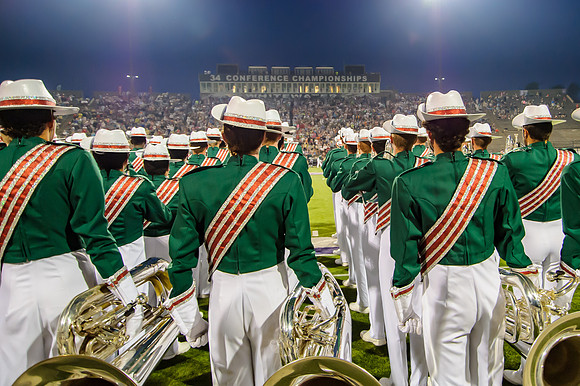

Today’s post is titled, “Drum Corps Photography 101: What it is and what it is NOT! -Part 1”. Before I talk about gear, shooting technique, photo editing software, file management, utilizing social media, etc. I feel it is important to talk about the realities of being a drum corps photographer.
Many beginner photographers take positions with world class drum corps as interns with the hopes of jump starting their careers. While there is valuable experience to be gained, most serious graphic designers and editors do not value the medium as source of valid technical education.
The main reason for this is that most drum corps do not employ a principle photographer with technical expertise to properly document a full season, let along provide an educational experience that would be comparable to accredited course study.
There is no one who can share the best practices for shooting in challenging conditions, file management and transfers, proper use of meta data to promote better SEO or use on social media. Typically intern photographers need to figure it out as they go.
Okay, I know it may sound like I have a negative view on drum corps photography, but nothing could be further from the truth. If you are passionate about the activity, if you are passionate about photography and if you have the chance… DO IT! However, if you think drum corps photography is a money making opportunity, it most certainly is not.
So, with all of that said it is much easier to start with what drum photography is not. Drum corps photography is not going to make you rich. Hell, you’ll be lucky to break even. Drum corps photography is not going to give you the exposure that will launch your career. Unfortunately photography has become a very cutthroat industry with the best of the best fighting over the few remaining opportunities. That’s not to say that a great drum corps image wont enhance your portfolio, but you’ll need to show a level of expertise well beyond the demands that drum corps can provide to be considered for a top tier position in photography.
Drum corps photography is an opportunity to improve your skills by following your passion. Drum corps photography allows you to support your favorite organization while doing something you love. Drum corps photography will provide the experiences that can shape you as an artist and an entrepreneur.
As I stated earlier, the average drum corps photographer intern lacks access to experienced, professional photographers which is why I have created this series. I am going to share some of my best practices to help improve your daily workflow so you can focus on creating better images.
With the 2021 season rapidity approaching, next weeks post will focus on file management from the road. I will share some tips for keeping large amounts of images organized, the maximization of storage space and how to share files when internet access isn’t the best.
In the meantime, please feel to check the galleries on my Zenfolio site.
You can get updates from my blog page by following me on Facebook, Instagram and/or Twitter.
Thanks for reading and if you have any questions, please send me an email.
Have a great a day and keep snapping!
Why I won't post original images on Facebook
Effective digital marketing requires a strong understanding of metadata and how it affects your SEO as a photographer. This article will be the first in a series meant to help young photographers get their images in front of more people and establish their brand.
So, why won’t I post original images on Facebook? It comes down to how Facebook manages data to ensure timelines are responsive. On average, 350 million photos are uploaded to Facebook each day which makes it necessary to compress digital images to their most basic digital profile. In other words, all of the metadata which includes camera settings, copyright information and the photographer’s info is removed by Facebook whenever an image is uploaded to preserve storage on their servers.
You might be thinking that’s not a big deal because you had over 200 “likes” on the last images you shared. Sure, it’s nice to see the “likes” and read the comments, but remember that is for just one image of the nearly 350 million images that were uploaded to Facebook today. What you want to strive for is a digital signature that spans multiple social media platforms over multiple search engines. You can’t do that when Facebook strips your images of all identifiable metadata.
I am not suggesting that you stay away from Facebook. Facebook is too big and needs to be a part of your digital marketing strategy. However, there are ways to maintain a presence on Facebook while protecting your brand and enhancing your SEO. Posting links to photo galleries is a good way to manage your digital profile as long as your metadata is properly setup and tied to the text of your post.
The links I share are tied to metadata-rich images and include unique hashtags that are used in combination with other hashtags that are trending on various social media platforms.
As people visit your gallery from Facebook, they interact with your images and the resulting traffic helps improve your SEO. Although that doesn’t sound sexy, these interactions help establish your brand and get you more easily found on various search engines.
With the inevitable security enhancements that will be introduced by Apple in iOS 14, having your digital profile established on Google/Bing/Yahoo will be necessary if you want people to see your photography.